No products in the cart.
Best R-22 Replacement Refrigerants: A Practical Retrofit Guide
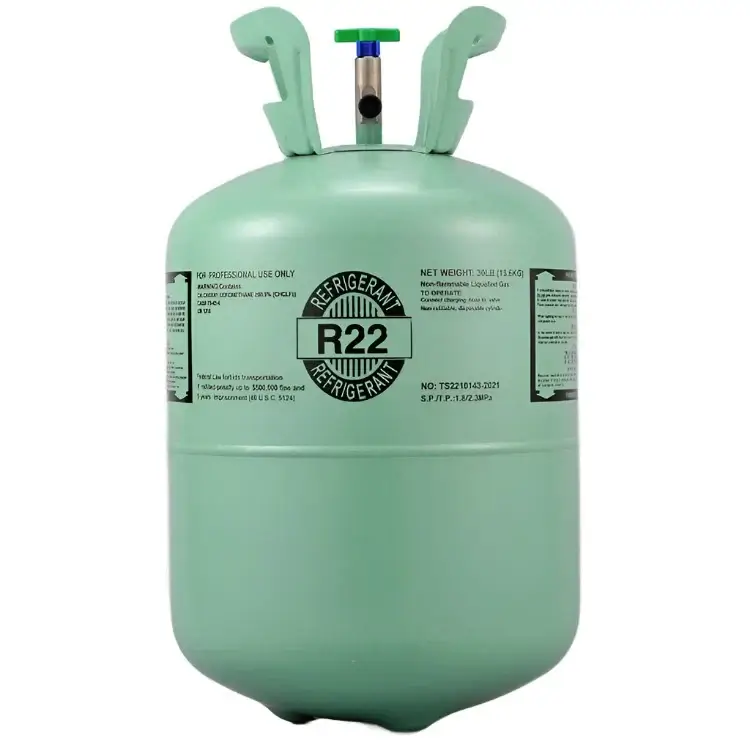
R-22 production and import ended in the United States in 2020. Every cylinder sold today comes from remaining or reclaimed stock, and the price reflects that. At some point every system running R-22 reaches the moment where topping it up stops making sense — and the question becomes which replacement to put in it.
There is no single right answer. The blend that suits a supermarket rack is not the one that suits a residential split system, and the deciding factor is usually not efficiency — it is whether you have to change the oil.
The oil question decides most retrofits
An R-22 system runs on mineral oil. Most HFC replacements need POE (polyolester) oil to circulate properly, and converting means recovering the charge, draining the compressor, flushing the system and refilling — hours of labour, and a real risk of leaving residual mineral oil behind that will eventually log in the evaporator.
That is why the mineral-oil-compatible blends exist at all. They trade a little efficiency for a retrofit you can finish in an afternoon. On an aging rooftop unit with five years left in it, that trade is almost always worth making.
If you can change the oil: R-407C
R-407C is the closest property match to R-22 among the common replacements. Operating pressures and capacity track R-22 closely enough that most systems need no component changes, and it is widely available at a moderate price.
Two things to plan for. It requires POE oil, so this is a full conversion. And it carries roughly 11°F of temperature glide, which changes how you read superheat and subcooling and affects TXV behaviour. Charge it as a liquid — charging a glide blend as vapour will shift its composition and leave you chasing a fault that is not there.
Best for: air conditioning and medium temperature refrigeration where the system is worth a proper conversion.
If you cannot change the oil
Four blends work with the mineral oil already in the system. They differ mostly in temperature range and availability.
R-422D (MO29)
R-422D was designed specifically as a drop-in for existing R-22 air conditioning and refrigeration. Mineral oil compatible, zero ozone depletion potential, and the closest thing to a genuine recover-and-recharge job. If downtime is the constraint, this is usually the first choice.
R-438A (MO99)
R-438A targets direct expansion systems and is also mineral oil compatible. It suits both air conditioning and refrigeration equipment running positive displacement compressors, and is a common choice for older commercial equipment.
R-421A
R-421A has the broadest oil compatibility of the group — mineral, alkylbenzene or POE. That flexibility makes it useful when you are not certain what oil is actually in a system you inherited, which on twenty-year-old equipment is more often than anyone would like.
R-417A and R-453A
R-417A and R-453A (RS-44B) both work with mineral, alkylbenzene and POE oils and track R-22 properties closely. Either is a sound choice for legacy AC and medium temperature refrigeration.
If the equipment runs a wide temperature range
R-427A covers low, medium and high temperature applications with one blend. For a contractor servicing mixed equipment, standardising on it means one refrigerant on the van instead of three. That logistical advantage often outweighs a small efficiency difference on any individual system.
What about commercial refrigeration?
If you are replacing R-22 in a supermarket rack or cold storage, the conversation shifts. The relevant blends are the lower-GWP HFO mixes — R-448A, R-449A and R-452A — which are also displacing R-404A. They need POE oil, but in commercial refrigeration you are usually doing a planned conversion anyway, and the GWP reduction matters for compliance as the phase-down tightens.
A quick decision path
- Residential or light commercial AC, minimum downtime — R-422D or R-438A
- AC, willing to convert oil, want closest performance — R-407C
- Unknown oil in an inherited system — R-421A
- Mixed equipment, one refrigerant on the van — R-427A
- Commercial refrigeration, planning for the phase-down — R-448A or R-449A
Two things that apply whatever you choose
Charge blends as a liquid. Every replacement listed here is a blend. Drawing vapour off the cylinder pulls the lighter components first and leaves you charging something other than what is on the label. Most also carry temperature glide, which changes how you read superheat — see temperature glide explained.
Label the system. The next technician needs to know what is in it. An unlabelled retrofit is how systems end up with three refrigerants mixed in them over a decade.
Federal law restricts the sale of R-22 and its replacements to EPA Section 608 certified technicians. If you still need R-22 to keep equipment running while you plan a conversion, we stock virgin factory-sealed cylinders and pallets.
Converting a whole site rather than one system? Pallet pricing is where the cost comes down — see buying refrigerant by the pallet.
Decided on a blend? The field sequence is in how to retrofit an R-22 system. Still weighing the mineral-oil options against each other? See R-421A vs R-422D vs R-438A.
Products covered in this guide
Virgin, factory-sealed cylinders. Free shipping across the US.
 R407C Refrigerant 25 LB Price range: $166.00 through $3,400.00
 R422D MO29 Refrigerant 25 LB | Arctic Prince Price range: $170.00 through $3,900.00
 R421A Refrigerant 25 LB | Arctic Prince Price range: $170.00 through $3,200.00
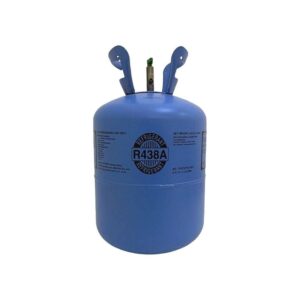 R438A (MO99) Refrigerant 25 LB Original price was: $400.00.$170.00Current price is: $170.00.