No products in the cart.
Temperature Glide Explained: Dew Point, Bubble Point and Superheat
R-22 was simple. One compound, one boiling point per pressure, one column on the chart. Nearly every refrigerant that replaced it is a blend, and blends do not behave that way.
Get this wrong and you will calculate superheat that is off by several degrees, then spend an afternoon chasing a metering device fault that does not exist.
What glide actually is
A zeotropic blend contains components with different boiling points. As liquid refrigerant moves through the evaporator, the lighter components boil off first. The remaining mixture is richer in the heavier components, which boil at a higher temperature — so the temperature rises across the evaporator even though pressure is essentially constant.
That spread is the glide. R-407C has roughly 11°F of it. Some commercial blends have more.
Bubble point and dew point
Because there is a range rather than a single temperature, PT charts for blends give you two numbers at each pressure:
- Bubble point — the temperature where liquid first starts to boil. The bottom of the range.
- Dew point — the temperature where the last liquid finishes vaporising. The top of the range.
The rule that matters
Superheat uses dew point. Subcooling uses bubble point.
Superheat is measured after all the liquid has vaporised — that is the dew point, by definition. Subcooling is measured where liquid is first present in the condenser — the bubble point.
Use bubble point for superheat on an 11°F glide blend and your reading is 11°F too high. You will see what looks like a starved evaporator and start adjusting a valve that was set correctly.
Why you must charge as a liquid
The same physics applies inside the cylinder. Draw vapour off the top and you pull the lighter components first, leaving a mixture that is no longer what the label says. Charge from that cylinder again later and you are putting something else into the system.
Always charge blends as a liquid — throttled into the suction line with the system running, or into the high side with it off. Never vapour-charge a zeotropic blend.
Topping up a leaking system
A leak does not lose all components equally. A system that has leaked significantly holds a composition that has drifted from spec, and adding more will not correct it.
For a small top-up after a repair, adding liquid charge is generally accepted. After a significant loss, recover and recharge. It costs more refrigerant and less diagnostic time.
Which refrigerants have glide
- None — R-32, R-134A: single compounds, one column, no glide
- Negligible — R-410A, R-404A: near-azeotropic, treat as single-temperature in practice
- Significant — R-407C, R-448A, R-449A, and most R-22 retrofit blends
If you are choosing an R-22 replacement, glide is one of the factors worth weighing — see our R-22 replacement guide.
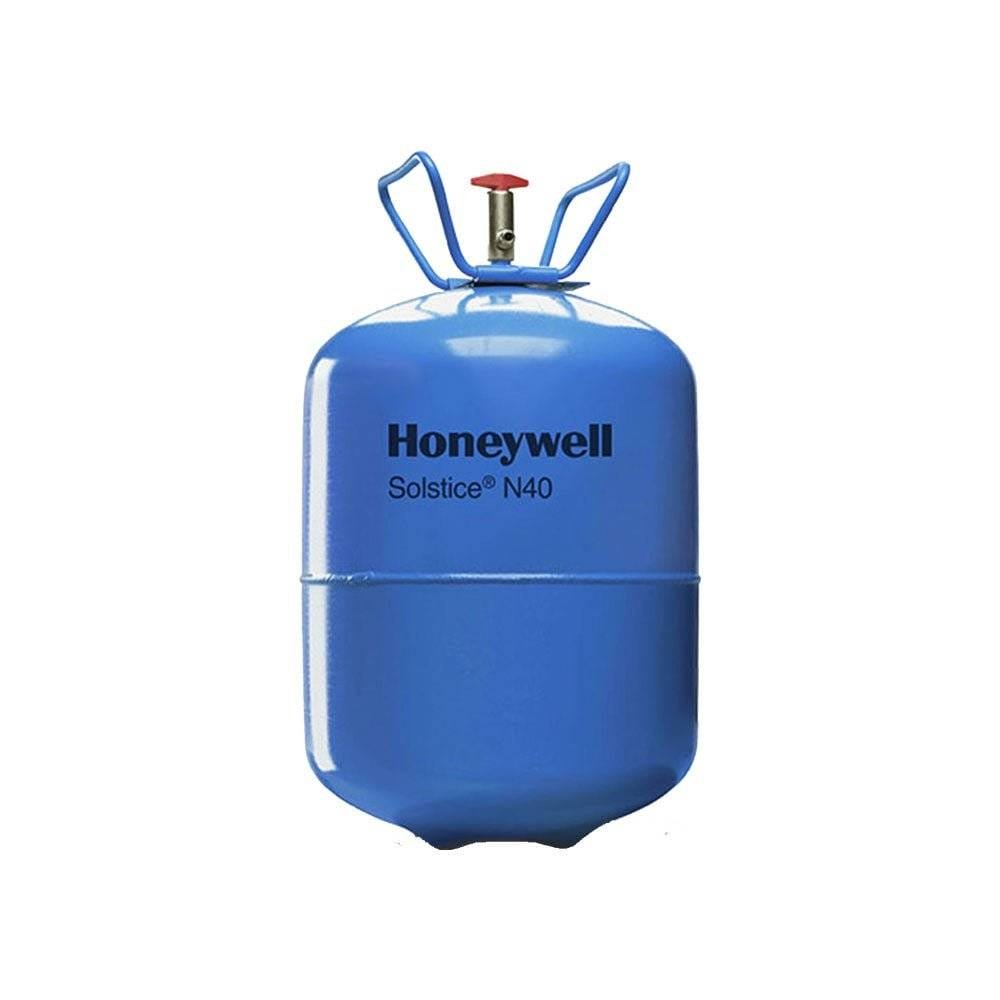
Products covered in this guide
Virgin, factory-sealed cylinders. Free shipping across the US.