No products in the cart.
R-407C vs R-22: What Actually Changes in a Retrofit
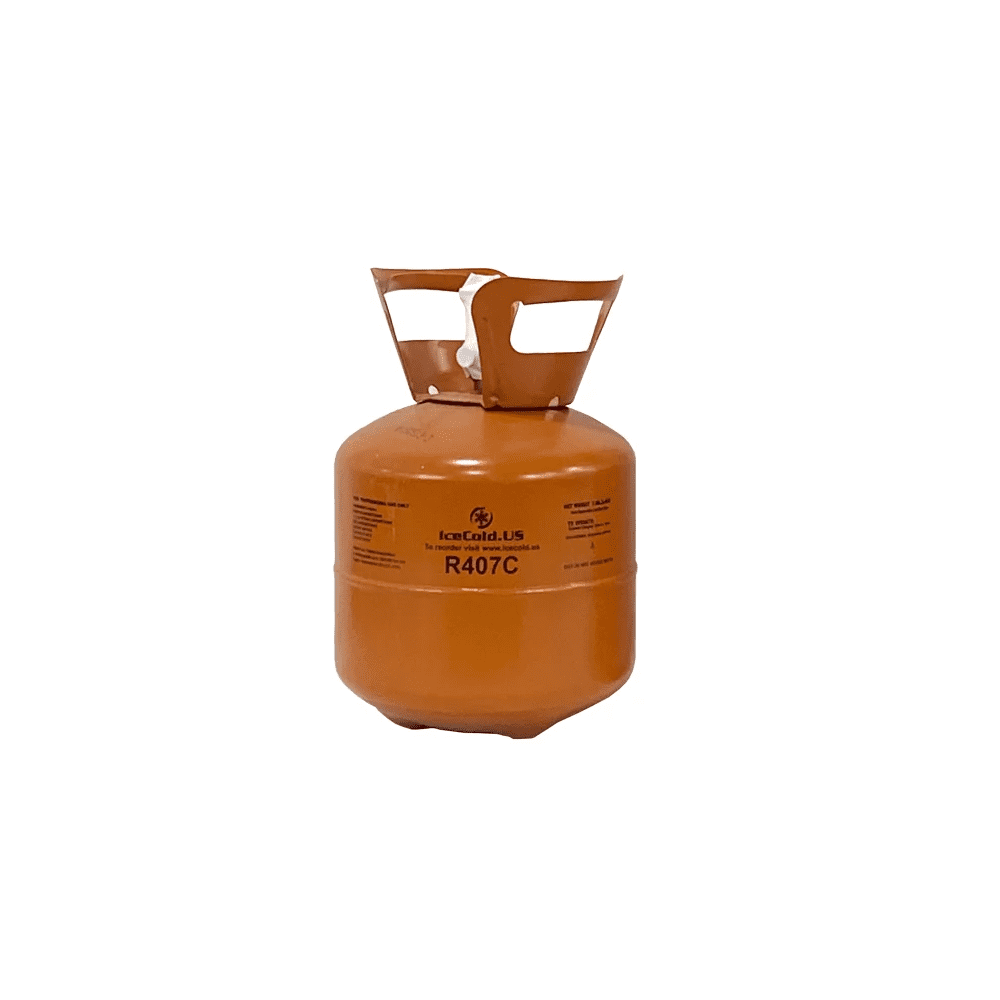
If you are converting an R-22 system and you are willing to change the oil, R-407C is usually the technically closest option. Pressures and capacity track R-22 well enough that most systems keep their existing components. But “closest match” is doing some work in that sentence, and two differences decide whether the retrofit goes smoothly.
Difference one: the oil
R-22 systems run mineral oil. R-407C needs POE. This is not optional — mineral oil will not return to the compressor reliably with an HFC blend, and you will find out the expensive way when the compressor starves.
A proper conversion means recovering the charge, draining the compressor, and flushing the system to clear residual mineral oil. Plan on multiple oil changes for systems with long line runs — residual mineral oil hides in the evaporator and comes back later as logging.
If that labour does not fit the job, stop here and look at the mineral-oil-compatible blends instead: R-422D, R-438A, R-421A or R-417A.
Difference two: temperature glide
R-22 is a single compound. It boils and condenses at one temperature for a given pressure. R-407C is a zeotropic blend of three components with different boiling points, so it changes temperature as it evaporates — roughly 11°F of glide.
Practically, that means your pressure-temperature relationship is no longer a single number. You read dew point for superheat and bubble point for subcooling. Use the wrong column on the chart and you will calculate superheat that is off by several degrees, then chase a metering problem that does not exist.
Glide also affects TXV behaviour. Most R-22 valves work acceptably with R-407C, but expect to adjust superheat, and on systems with marginal valve sizing, expect to replace them.
Charge it as a liquid
Because the components boil at different temperatures, drawing vapour off the cylinder pulls the lighter fractions first. The blend left in the cylinder shifts, and so does what goes into the system. Always charge blends as a liquid — throttled into the suction side with the system running, or into the high side with it off.
The same rule means you cannot top up a leaking R-407C system indefinitely and expect the composition to stay correct. If a system has leaked significantly, recover and recharge rather than adding.
When R-407C is the right call
- Air conditioning or medium temperature refrigeration
- The equipment has enough life left to justify a full conversion
- You can access the compressor to change oil
- You want performance as close to original R-22 as the market offers
When it is not: emergency call-outs, systems you cannot take offline, or equipment near end of life. Those are drop-in territory.
Full comparison of every option in our R-22 replacement guide.
Products covered in this guide
Virgin, factory-sealed cylinders. Free shipping across the US.